You’ve tried the diets. You’ve logged hours at the gym. Yet certain areas of your body refuse to change. If this sounds familiar, you’re not alone, and you’re probably weighing your options—no pun intended.
Two popular paths stand out: CoolSculpting and medical weight loss programs. Both can help you reach your goals, but they work in different ways and solve different problems. Understanding the distinction matters before you invest your time and money.
Let’s break down what each approach offers so you can make a choice that fits your body and your life.
What Is CoolSculpting?
CoolSculpting is an FDA-approved body contouring treatment that freezes and destroys fat cells. The technical term is cryolipolysis. During a session, a device cools targeted areas to temperatures that kill fat cells without harming your skin or surrounding tissue.
Your body then processes and eliminates these dead cells over the following weeks and months. The treated area becomes slimmer as your body flushes out the destroyed fat.
CoolSculpting targets stubborn fat in specific spots. Think love handles, belly pooch, back fat, or that area under your chin. These are places where fat tends to hang on, no matter how clean your diet is or how consistent your workouts are.
CoolSculpting doesn’t help you lose body weight. It reshapes your body by reducing fat in specific areas. Most people need two to three sessions per area to see their best results.
What Is Medical Weight Loss?
Medical weight loss takes a broader approach. These programs address your overall body weight and body composition through a combination of methods supervised by healthcare professionals.
A medical weight loss program might include:
- Prescription medications like semaglutide or tirzepatide
- Customized nutrition plans
- Metabolic testing to understand how your body burns calories
- Regular check-ins with doctors or nurse practitioners
- Behavioral coaching to build lasting habits
The goal is sustainable fat reduction across your entire body. Medical weight loss programs tackle the root causes of weight gain—hormones, metabolism, eating patterns, and lifestyle factors.
These programs work well for people who need to lose significant weight or who have struggled with weight management for years. They’re also a strong choice if you have health conditions linked to excess weight, like high blood pressure or type 2 diabetes.
Related Article: The Best Weight Loss Injection in Columbus, Ohio
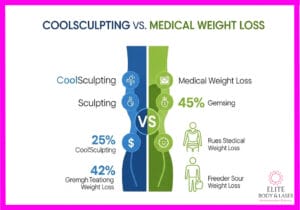
The Core Difference: Spot Reduction vs Overall Loss
This is the key point most people miss when comparing these options.
CoolSculpting is not a weight loss solution. It’s a sculpting tool. If you’re close to your goal weight but frustrated by pockets of fat that won’t budge, CoolSculpting can help refine your shape. It excels at fat reduction in targeted zones.
Medical weight loss addresses your whole body. It helps you shed pounds, improve your metabolic health, and change your relationship with food. The scale moves. Your clothing size drops. Your energy levels shift.
In a nutshell, CoolSculpting is for fine-tuning, while medical weight loss is for transformation.
Who Should Consider CoolSculpting?
CoolSculpting works best for people who meet certain criteria.
You’re a good candidate if you’re within 20 to 30 pounds of your ideal weight. You exercise and eat well, but specific areas don’t respond to your efforts. You want to address one or two problem zones rather than lose weight overall.
CoolSculpting also suits people who prefer non-surgical options. There’s no anesthesia, no incisions, and no downtime. You can return to normal activities right after your appointment.
Results take time to appear. Most people notice changes around three weeks after treatment, with full results visible at two to three months. Patience is part of the process.
The treatment works on areas with pinchable fat. It’s not designed for loose skin or for people who carry most of their weight internally, around their organs.
Who Should Consider Medical Weight Loss?
Medical weight loss programs fit a wider range of situations.
You might benefit if you need to lose more than 30 pounds. You’ve tried multiple diets without lasting success. Your weight affects your health and quality of life. You want professional guidance and accountability throughout your weight loss journey.
These programs also help people who suspect something deeper is going on. Hormone imbalances, thyroid issues, and metabolic dysfunction can all sabotage your efforts. A medical approach identifies and addresses these factors.
The medications used in modern medical weight loss programs have changed the game. GLP-1 drugs like semaglutide help control appetite and blood sugar in ways that diet and exercise alone cannot match. Many patients describe feeling free from constant food cravings for the first time in their lives.
What to Expect During Treatment
Knowing what happens during each treatment can help you feel prepared and confident in your decision
CoolSculpting Sessions
A CoolSculpting appointment lasts 35 to 60 minutes per area. You’ll sit or recline while the device suctions and cools your target zone. Most people describe the sensation as intense cold followed by numbness.
You can read, work on your laptop, or watch videos during treatment. When the session ends, your provider will massage the treated area to break up the frozen fat cells.
Common side effects include redness, swelling, bruising, and tenderness. These fade within a few days to a few weeks. Some people experience tingling or numbness that resolves over time.
Related Article: How Long Does CoolSculpting Last?
Medical Weight Loss Programs
Medical weight loss involves an initial consultation with lab work and health assessments. Your provider creates a treatment plan based on your specific needs, goals, and medical history.
If medications are part of your plan, you’ll learn how to administer them and what to expect. Weekly or monthly check-ins help track your progress and adjust your approach as needed.
Side effects from weight loss medications vary. Nausea, constipation, and fatigue are common in the early weeks. Most people find these manageable and temporary.
The timeline stretches longer than CoolSculpting. Meaningful weight loss takes months. Building a healthy lifestyle takes even longer. But the results can be profound and lasting.

Why Not Both?
These options aren’t mutually exclusive. In fact, they complement each other well.
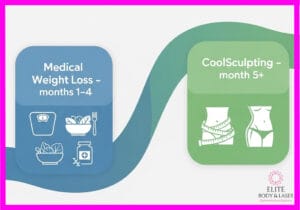
Many people start with medical weight loss to drop significant pounds and improve their overall health. Once they reach a stable weight, they turn to CoolSculpting to polish their results and address lingering stubborn fat.
This combination works because medical weight loss shrinks fat cells while CoolSculpting eliminates them. When you lose weight through diet and medications, your fat cells get smaller but remain in your body. CoolSculpting permanently removes fat cells from the treated area.
A staged approach gives you comprehensive weight management followed by precise body contouring. Your provider can help you decide if this makes sense for your situation.
Making Your Decision
Ask yourself a few questions!
How much weight do you want to lose? If the answer is more than 20 pounds, medical weight loss deserves serious consideration.
Are you frustrated by specific areas that won’t respond to diet and exercise? CoolSculpting might solve that problem directly.
Do you want to address your health overall, or focus on appearance? Medical weight loss often improves blood pressure, blood sugar, and energy levels alongside fat reduction. CoolSculpting targets appearance alone.
What’s your budget and timeline? Both require investment, but the type of investment differs.
Where Do You Go From Here?
CoolSculpting and medical weight loss serve different purposes. CoolSculpting sculpts and refines. Medical weight loss transforms and heals.
Neither option is better in absolute terms. The right choice depends on where you’re starting, where you want to go, and what obstacles stand in your way.
A consultation with a qualified provider can help clarify which path suits your situation. They’ll assess your body composition, discuss your goals, and recommend a treatment plan tailored to you.
Your body is unique. Your solution should be too.